Market Updates February 16, 2026

Denver Metro Market Update – January 2026: Early Signals After a Flat Year

As 2026 begins, the Denver Metro real estate market is carrying forward the same cautious momentum that defined much of the past three years. Buyers and sellers entered January looking for signs of directional movement after an extended period of stagnation. While uncertainty remains, early activity suggests renewed engagement on both sides of the market.

Market Overview – January 2026:

  • Median Sale Price: $569,500 — down 0.96% from December and down 0.96% year-over-year, reflecting typical winter softness rather than a market correction.
  • New Listings: 4,455 — a sharp 152.55% increase from December and up 2.41% from January 2025, as many sellers re-entered the market after the holidays.
  • Days in MLS (Median): 53 days — up from 45 in December and 45 last year, continuing the trend toward longer timelines.
  • Close-Price-to-List-Price Ratio: 97.94% — down slightly from December and last year, showing increased buyer leverage and more negotiation.

Current Conditions:

January showed a clear seasonal reset. Buyer interest returned quickly, with pending sales up 47.19% month-over-month, signaling renewed activity even as affordability challenges persist. However, closed sales declined 40.55% from December, a reminder that closings lag behind contract activity — especially following a slow holiday period.

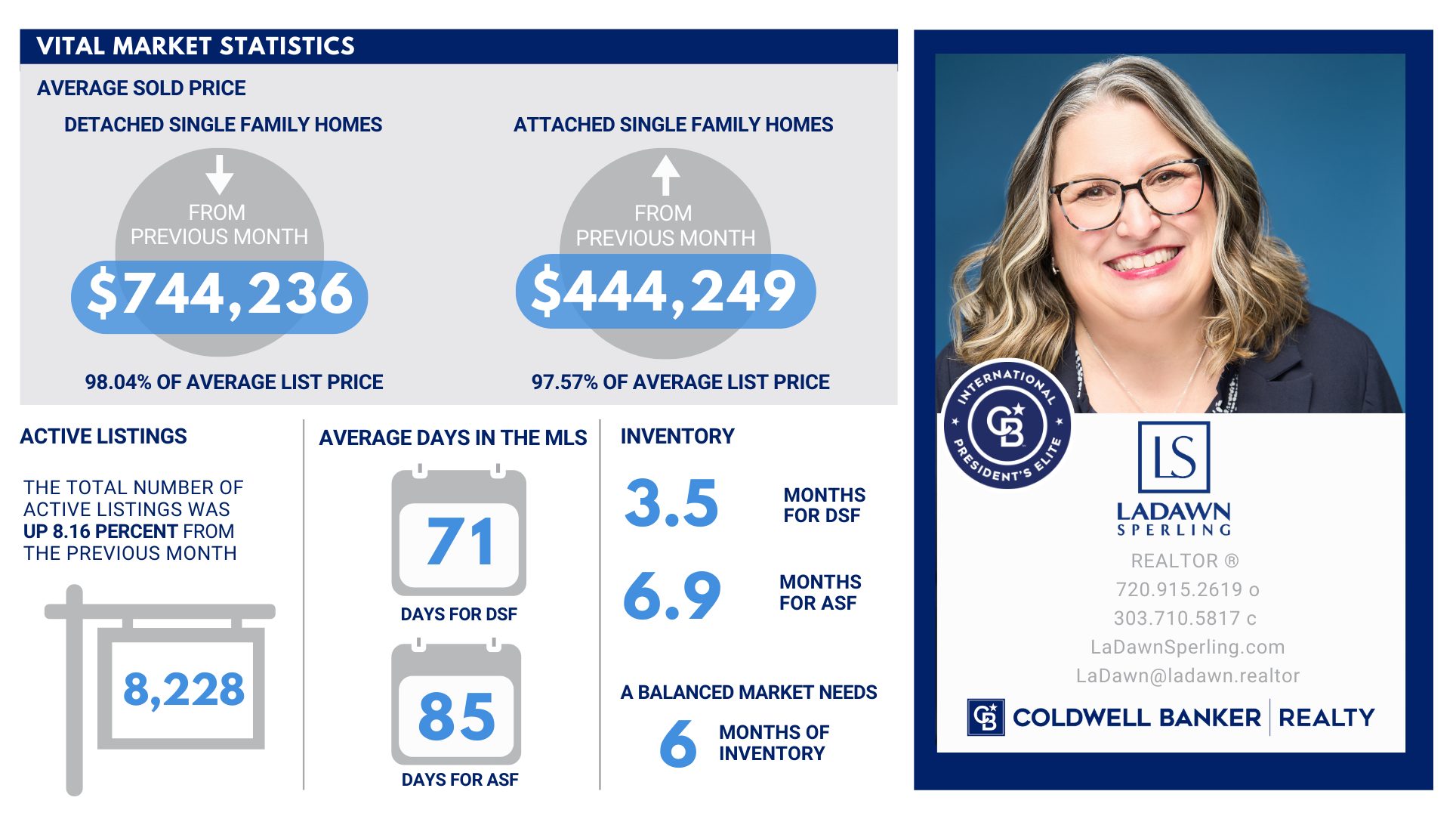
Inventory also moved higher. Active listings rose to 8,228, up 8.16% from December and 7.02% from January 2025. Historically, active listings tend to decline from December to January. This increase highlights stronger seller participation heading into the new year.

While volume and prices remain under pressure, the market is behaving predictably, not defensively. These are measured shifts, not distress signals.

For Sellers:

This is a market that rewards realism. Pricing based on peak years or early optimism leads to longer days on market and eventual concessions. Homes that are priced accurately from day one — and prepared thoughtfully — continue to attract buyers. With inventory rising, strategy and presentation matter more than timing.

For Buyers:

Buyers have more options and more leverage than they’ve had in years. Negotiation is back on the table, especially for homes that have been on the market longer. That said, well-priced and well-located properties are still moving. Being prepared to act when the right opportunity appears remains key.

Looking Ahead:

Despite three years of flat performance, seasonality remains intact. With inventory rebuilding earlier than normal, the spring market may arrive sooner than expected. Major shifts aren’t on the horizon, but stability can be an opportunity for those who act decisively when personal timing aligns.

This market isn’t broken — it’s normalized. And navigating it successfully requires clarity, preparation, and adaptability.

Real Estate News, Tips, & Tricks February 3, 2026

Best Real Estate Agents in Denver Metro: How to Choose the Right Agent for Selling Your Home

How do you choose the right real estate agent to sell your home in the Denver Metro area?

Selecting the right real estate agent in Denver Metro involves evaluating experience, local market knowledge, and communication skills to ensure a successful home sale.

Selling your home in the bustling Denver Metro area can be a daunting task. With a competitive market and diverse neighborhoods, finding the right real estate agent is crucial. This guide provides experienced homeowners with insights on choosing an agent who will navigate the complexities of the Denver market effectively.


Understanding the Denver Metro Market


Denver Metro is a unique real estate market characterized by its diverse neighborhoods, each with its own charm and price range. From the historic homes in Lakewood to the modern developments in Highlands Ranch, understanding local nuances is essential. A seasoned agent will have in-depth knowledge of market trends, pricing strategies, and buyer preferences specific to areas like Arvada, Golden, and Littleton.


Local Expertise Matters


When selecting an agent, prioritize local expertise. An agent familiar with the Denver Metro area can provide insights into neighborhood dynamics, school districts, and community amenities. This local knowledge not only aids in setting a competitive price but also in marketing your home effectively to attract the right buyers. Look for agents who have a proven track record in your specific area, as they are more likely to have established networks and resources.


Evaluating Experience and Credentials


Experience is a critical factor when choosing a real estate agent. An agent with years of experience in the Denver market will have navigated various market conditions and can offer strategic advice tailored to your needs. Check for credentials such as certifications from the National Association of Realtors (NAR) and adherence to ethical standards. These credentials ensure that the agent is committed to professional excellence and compliance with industry regulations.


Communication and Negotiation Skills


Effective communication is vital in the real estate process. Your agent should be responsive, keeping you informed about every step of the selling process. They should also be skilled negotiators, capable of securing the best terms and price for your home. During initial meetings, assess their communication style and ensure it aligns with your expectations. A good agent listens to your needs and tailors their approach accordingly.


Importance of Transparency


Transparency builds trust between you and your agent. Ensure your agent provides clear, straightforward answers to your questions and is transparent about their commission structure and marketing plan. A reputable agent will outline a detailed strategy for selling your home, including how they plan to market it and the platforms they will use to reach potential buyers.


Marketing Strategy


A robust marketing strategy is crucial for attracting buyers. Your agent should utilize a mix of traditional and digital marketing tactics, including professional photography, virtual tours, and social media advertising. In the tech-savvy Denver market, leveraging online platforms can significantly increase your home’s visibility. Ask potential agents about their marketing plans and success stories from past sales.


The Interview Process


Interviewing multiple agents is a crucial step in finding the right fit. Prepare a list of questions focusing on their experience, market knowledge, and strategy for selling your home. Consider asking about recent sales in your area, average time on market for their listings, and how they handle challenges during the selling process. This will give you a sense of their expertise and how they might handle the sale of your home.


Red Flags to Watch Out For


Be wary of agents who make unrealistic promises or pressure you into quick decisions. An ethical agent will provide a realistic assessment of your home’s value and market conditions. Trust your instincts—if something feels off, it’s worth exploring other options.


Conclusion


Choosing the right real estate agent in the Denver Metro area requires careful consideration of experience, local expertise, and communication skills. By selecting an agent who understands the intricacies of the local market and aligns with your expectations, you position yourself for a successful home sale. Take the time to interview potential agents, ask the right questions, and trust your instincts to make the best choice for your needs.


Real Estate News, Tips, & Tricks January 22, 2026

Home Updates That Actually Pay You Back When You Sell

Planning to sell this spring? While you may be tempted to hold off until the first blooms or the spring showers hit, that’s actually waiting too long to get started by today’s standards.

Buyers have more options than they did a few years ago. So, it’s worth it to tackle repairs now and make sure your house is set up to stand out. Because you don’t want to be caught scrambling right before the spring rush. Or, running out of time to do the work your house really needs.

The key is focusing on updates that actually matter. And that’s exactly where return-on-investment (ROI) data comes in handy.

Which Projects Tend to Pay Off?

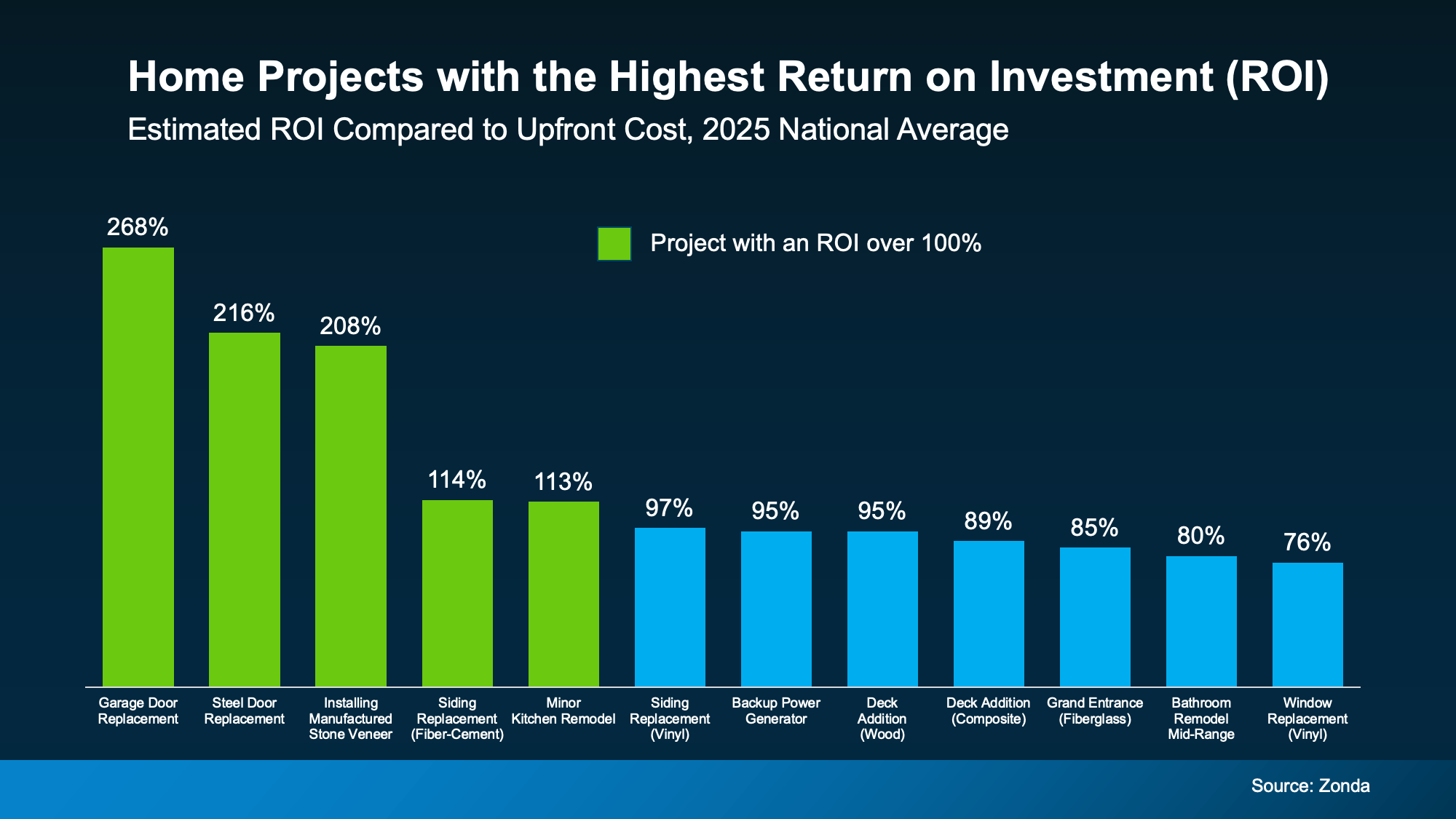
Every year, Zonda looks at which home improvements deliver the most bang for the buck when you go to sell the home. And the results can be a little surprising.

The green in the chart below shows the updates where sellers have the biggest potential to add value based on that research:

a graph of a graph of a companyWhile there’s a wide range of projects represented in this data, the cool part is, some of the top winners aren’t big to-do’s. They’re just swapping out doors.

Small Updates, Big Visual Impact

This goes to show little projects can have a big impact. So, you don’t have to spend a fortune. And you don’t need to tackle everything on this list. But in today’s market, doing nothing can work against you.

Now that buyers have more homes to choose from, a lot of them are going to opt for what’s move-in ready.

The best advice? Focus on what your house needs, whether it’s listed here or not – like the repairs you’ve been putting off. A front door or shutters in need of a little TLC. Piles of leaves in the yard. Scuffed up paint where your kids play inside. Those details matter too.

Mallory Slesser, Interior designer and Home Stager, explains it to the National Association of Realtors (NAR) this way:

“If you’re looking for affordable updates that pack a punch, dollar for dollar, I would say painting; changing out light fixtures; changing out hardware; maybe new draperies or window treatments. Those are all cost-effective ways to make a big statement. It really changes the space.”

These seemingly small things help buyers focus on the home itself – not the work they think they’ll have to do after moving in. And that’s paying off for other sellers. Buyers are often willing to spend more on homes that feel well cared for, updated, and move-in ready.

This Chart Is a Starting Point, Not a Strategy

Here’s the important thing to remember. National data like this is a guideline. Buyer preferences are going to vary by location, price point, and even neighborhood. That means a project that boosts value in one area might be unnecessary (or even overkill) in yours.

That’s why the first step should always be to talk with a local real estate professional before you start.

An experienced agent can help you answer questions like:

  • Which updates do buyers in your market expect?
  • What can you skip without hurting your sale?
  • Where will a small investment make the biggest difference?
  • Is it better to update, or sell as-is?

That guidance helps you avoid over-improving and under-preparing.

Bottom Line

If you’re looking to sell this spring, you still have time to make updates that help your home stand out – without taking on a full renovation.

If you’re not sure where to start, let’s talk through what makes sense for your house. A quick conversation can help you prioritize the updates that’ll pack the biggest punch.

What’s one upgrade you’ve been thinking about – and wondering if it’s worth it?

Market UpdatesUncategorized January 16, 2026

Denver Metro Market Update – December 2025: Stability Through the Slowdown

As 2025 comes to a close, the Denver Metro real estate market continues to reflect the stabilization trend we’ve seen since 2023. While national headlines speak of slowdown and uncertainty, the data tells a more nuanced story—one of seasonal rhythm, measured activity, and recalibrated expectations.

Market Overview – December 2025:

  • Median Sale Price: $575,000 — down just 0.86% from November and 0.51% from December 2024, showing year-end price stability.
  • New Listings: 1,775 — a 31.91% drop from November, following a predictable seasonal pattern as sellers hold off during the holidays.
  • Days in MLS (Median): 45 days — up from 36 in November and 39 this time last year, indicating longer timelines in a more balanced market.
  • Close-Price-to-List-Price Ratio: 98.25% — holding steady, suggesting that well-priced homes continue to sell near asking.

Current Conditions:

Active listings fell 27.59% month-over-month as many sellers temporarily pulled homes off the market for the holidays. Despite this dip, closed sales actually rose 9.23% compared to November. While some sellers adjusted prices and timelines, the overall market remained steady. Throughout the year, broader economic forces—interest rates, inflation, and policy shifts—had more impact on buyer behavior than traditional market fundamentals.

For Sellers:
The 2025 market rewarded those who priced strategically from day one. As we head into 2026, presentation and preparation will continue to matter. Buyers are thoughtful and cost-conscious, and homes that are move-in ready and competitively priced are still moving. Overpricing leads to extended market time and deeper concessions—getting it right up front makes all the difference.

For Buyers:
Inventory may be down now due to seasonal norms, but options are expected to return in early 2026. With stable pricing and fewer bidding wars, this is a great time to plan your purchase. Focus on financing strategies like rate buydowns and work closely with professionals who can help you find the right opportunities as more listings return in Q1.

Looking Ahead:
As we enter 2026, expect continued steadiness—modest appreciation, moderate volume, and mortgage rates that hover between 6% and 7%. Buyers and sellers who adapt to this “new normal” with flexible, well-informed strategies will be best positioned for success.

Let’s Talk Strategy for 2026
Whether you’re planning to buy, sell, or just need guidance on where the market’s heading, I’m here to help you make confident, informed decisions.

​​This update is based on information provided by the Denver Metro Association of Realtors® for the period of  December 1, 2025, through  December 31  2025, for the following counties: Adams, Arapahoe, Boulder, Broomfield, Clear Creek, Denver, Douglas, Elbert, Gilpin, Jefferson and Park.

Real Estate News, Tips, & Tricks December 18, 2025

Why Selling Your House This Winter Gives You an Edge

Spring gets all the attention, but it’s not always the best time to sell a house. Yes, more buyers show up, but so do a lot of other sellers.

Winter is different. With fewer homes on the market, your house has a much better chance of standing out. And that one advantage can make a big difference.

Winter Is When Your Listing Stands Out

History shows the number of homes for sale tends to drop during the winter months. It’s a trend that’s predictable almost every year.

Data from Realtor.com shows this pattern clearly. Inventory dips in the winter (the green circles in the graph below), then climbs again as soon as spring approaches:

a graph with green circles and numbersAnd based on the latest data available, it looks like that pattern may be true again in 2025. The graph shows the supply of homes for sale is starting to come down as we head into the end of the year. And if history is any indicator of where it goes next, it’ll continue to fall just like it usually does.

Here’s why knowing this gives you an edge.

While inventory is higher now than it’s been in the last few years, there are still not as many homes for sale as there’d be in a normal market (2017-2019). And we may even be poised for inventory to dip a bit as the weather cools.

That gives you an opportunity. If you work with an agent to list now, you’ll sell while other homeowners are taking their homes off the market and before the number of homes for sale climbs this spring.

Less competition from other sellers now = more attention on your house this season.

Why wait until everyone else lists in the spring when you can get ahead of the crowd?

Winter Buyers Are Serious Buyers

Another big perk is the buyers looking right now usually need to move.

They’re not just browsing for fun. They’re relocating for work, dealing with a lease ending, making a big life change, or simply ready to move forward sooner rather than later. As U.S. News explains:

“. . . buyers who are trudging through wintry weather often have a good reason for being out in the cold – they need to move. Whether it’s a relocation for a new job, a divorce or the arrival of a new baby, buyers who brave the elements are usually serious and able to make quick decisions.

That means fewer weekend wanderers and more highly motivated, qualified buyers walking through your door.

And since we know inventory usually drops this time of year, odds are they’ll have a little less to choose from compared to the fall. If you price and prep your house right, maybe your house will be the one that catches their eye.

Bottom Line

Winter might not get the same buzz as spring, but that’s exactly why it works in your favor. Less competition from other sellers, more motivated buyers, and a chance for your house to truly stand out.

If you’re thinking about selling, this season can give you a real advantage. Let’s connect and talk through what listing now could look like for you.

Market Updates December 17, 2025

Denver Metro Market Update – November 2025: Normal Is Not Broken

As we close out 2025, the Denver Metro real estate market is offering a much-needed return to balance. While the headlines often suggest a “slow” or “uncertain” market, the data paints a different picture: this is what seasonal normalization looks like.Buyers are adjusting to affordability realities, sellers are responding with better pricing strategies, and the frenzy of the past few years has given way to more predictable rhythms.

Market Overview – November 2025:

  • Median Sale Price: $585,000 — down 1.85% from October, flat compared to last year
  • New Listings: 2,620 — a 41.39% drop from October, closely mirroring seasonal trends
  • Days in MLS (Median): 36 days — up slightly from 33 in October, reflecting typical holiday slowdown
  • Close-Price-to-List-Price Ratio: 98.32% — consistent with last month, indicating steady negotiation margins

Current Conditions:

The steep month-over-month drop in new listings (-41.39%) and active inventory (-15.92%) reflects a typical seasonal pullback, nearly identical to November 2024. Sellers are pausing during the holidays, not exiting the market altogether. Buyers, meanwhile, still have negotiating power. The market is no longer dominated by bidding wars, but homes priced right are still moving—especially in the detached segment where demand remains relatively steady.

For Sellers: This isn’t a broken market—it’s a functional one. Strategic pricing and presentation matter more than ever. Homes that are priced correctly are still selling close to list price with minimal concessions.

For Buyers: Inventory is tighter right now, but you have time to think and negotiate. Don’t expect deep discounts—but do expect a market where rational offers and realistic expectations prevail.

Looking Ahead: December and January will likely continue the trend of slower activity. But come spring, we can expect a seasonal surge in listings and buyer interest. Those who understand the difference between a quiet market and a healthy one will be the first to benefit.

Need Help Navigating This Market? Whether you’re buying, selling, or just exploring your options, I’m here to guide you with expert insights tailored to your needs.

This update is based on information provided by the Denver Metro Association of Realtors® for the period of  November 1, 2025, through  November  30  2025, for the following counties: Adams, Arapahoe, Boulder, Broomfield, Clear Creek, Denver, Douglas, Elbert, Gilpin, Jefferson and Park.

Real Estate News, Tips, & Tricks December 11, 2025

The 3 Housing Market Questions Coming Up at Every Gathering This Season

Whether it’s at a family gathering, your company party, or catching up with friends over the holidays, the housing market always finds its way into the conversation.

Here are the top three questions on a lot of people’s minds this season, and straightforward answers to help you feel more confident about the market.

1. “Will I even be able to find a home if I want to move?”

Yes, more than you could a year or two ago.

The number of homes for sale has been rising over the past few years. According to data from Realtor.com, there have been more than one million homes on the market for six straight months, something that hasn’t happened since 2019 (see graph below):

a graph of a number of homesThat means two things:

  • Buyers have more options.
  • Sellers have more places they can move to next.

Many homeowners who held off are realizing the shelves aren’t bare anymore. So, if you hit pause on your home search last year because nothing fit your needs, it may be worth another look. With more homes on the market now, you’re not competing for the same handful of listings like you were a couple of years ago.

And because there’s a bit more to choose from, homes aren’t disappearing the minute they hit the market. That gives buyers more space to breathe, more options to compare, and a little more time to make a confident decision.

2. “Will I ever be able to afford a house?”

Affordability is starting to improve. Finally.

It’s been a tough few years for buyers. But this year brought some much-needed good news:

  • Mortgage rates have been easing.
  • Home price growth has been moderating.

That adds up to a monthly mortgage payment that’s hundreds of dollars lower than it would have been just a few months ago (see graph below):

a graph of blue rectangular barsBuying still isn’t easy, but the numbers are starting to improve. For a lot of people, that means buying a home is becoming a more realistic goal again.

3. “Should I wait for prices to come down?”

A lot of people worry that the housing market is about to crash, but the data doesn’t point in that direction. Yes, the number of homes for sale has been rising, but it’s still nowhere near the level needed for prices to fall significantly on a national scale. On top of that, homeowners today have a lot of equity and are in a much stronger financial position than they were back in 2008.

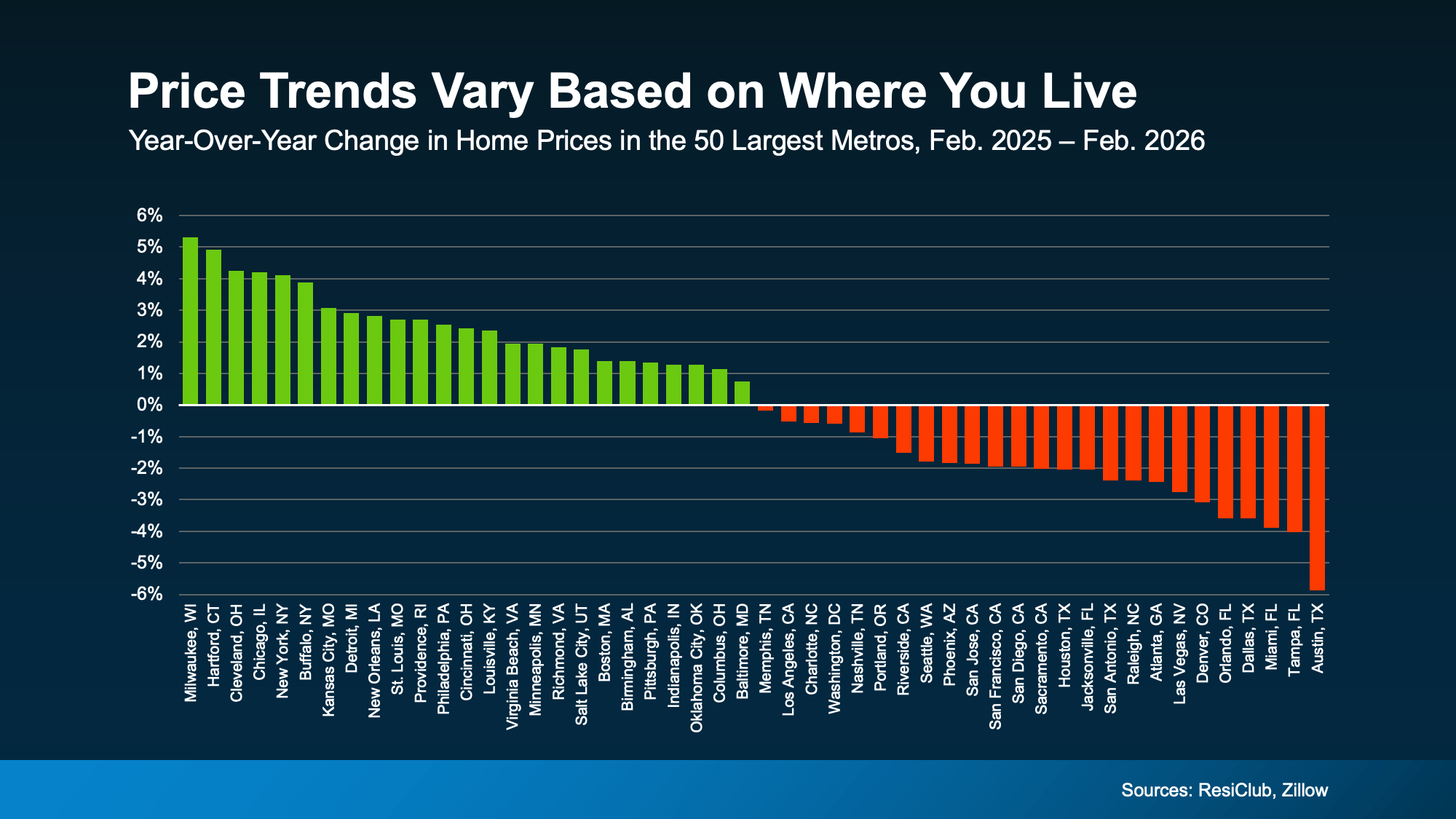
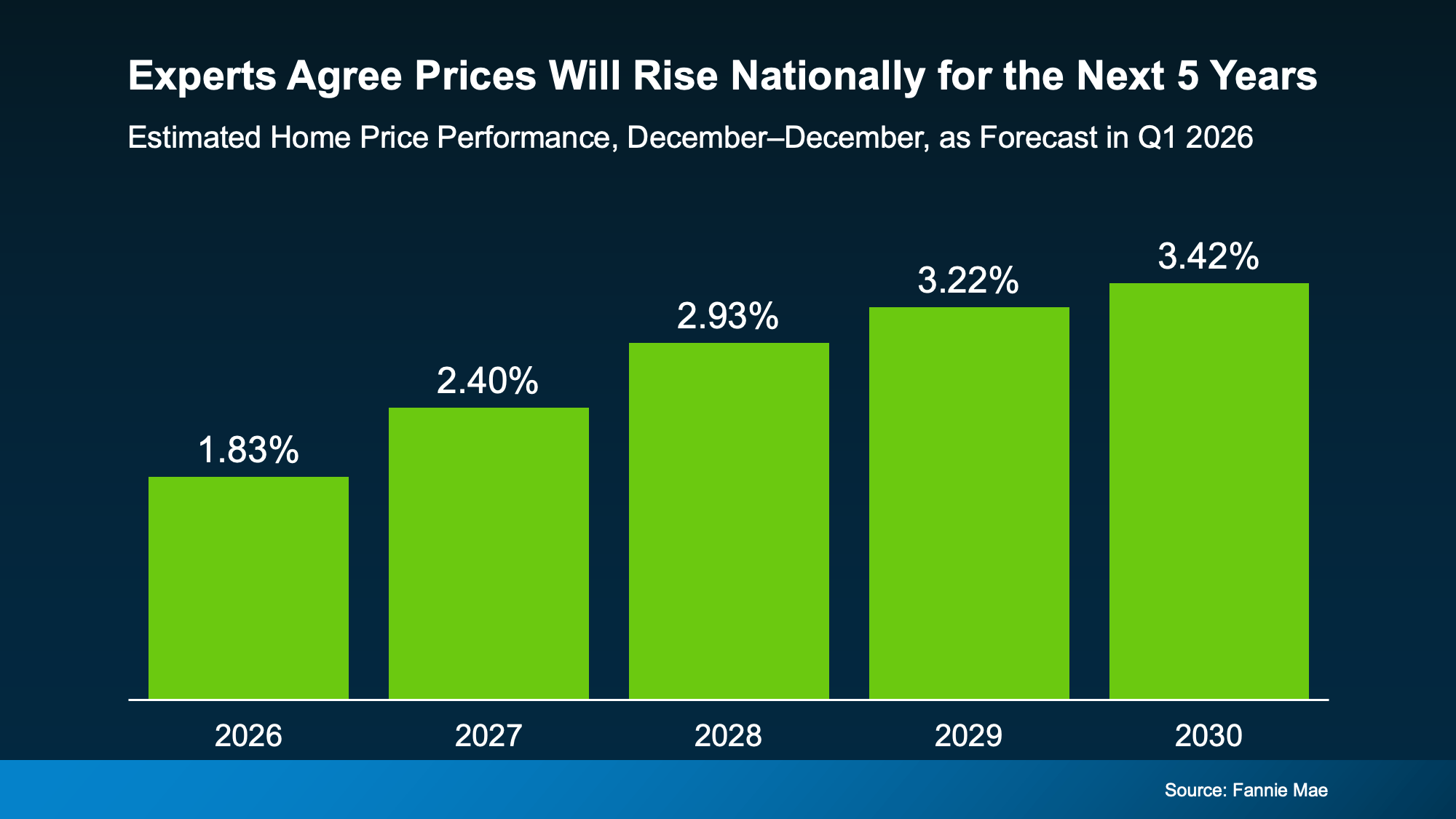
Of course, every local market is a little different. Some areas are still seeing prices climb, while others that saw huge spikes a few years ago are leveling off or seeing small corrections. But overall, the national picture is clear: experts surveyed by Fannie Mae project home prices will keep rising, just at a slower, more normal pace (see graph below):

a graph of green rectanglesThat’s why waiting for a major price drop to get a deal isn’t a very strategic plan. History shows the same thing over and over: people who spend time in the market tend to build the most long-term wealth, not the people who try to time the market perfectly.

Bottom Line

Talk about the housing market can feel loud and confusing, especially when you’re hearing so many different takes. If you want to understand what these trends mean for your goals, let’s connect and walk through it together.

Market Updates November 14, 2025

Denver Metro Market Update – October 2025: Subtle Shifts in a Steady Market

As we head toward the final stretch of the year, the Denver Metro housing market continues to show consistency—with a few noteworthy shifts. October brought slight cooling in sales activity and inventory, while pricing remained relatively stable.

Market Overview – October 2025:

  • Median Sale Price: $595,000, up 1.45% from September and exactly equal to October 2024, marking steady year-over-year pricing.
  • New Listings: 4,483 new listings entered the market—down 9.67% from September and 4.6% from the same time last year.
  • Days in MLS (Median):33 days, up from 26 in October 2024, showing properties are taking longer to sell.
  • Close-Price-to-List-Price Ratio: 98.35%, virtually unchanged from last month and only slightly below last year.

Current Conditions:

At month’s end, active inventory stood at 12,495 homes, down 4.43% from September, yet still 14.21% higher than a year ago. While new listings dipped significantly, pending sales rose slightly—indicating buyers are still active but selective.

Price performance remained positive. Average close price rose to $732,213, a 6.17% increase from September and 3.78% year-over-year. Median price stability suggests sellers are pricing more realistically and buyers are responding when homes are positioned well.

For Sellers:

Fewer homes hitting the market means less competition, but today’s buyers expect value. Pricing and presentation remain critical—homes that align with buyer expectations are still moving.

For Buyers:

You have options. With inventory still higher than last year and homes spending longer on the market, there’s time to explore, compare, and negotiate—especially with fewer bidding wars than in past fall markets.

Looking Ahead:

As the holiday season approaches, activity often slows—but this year’s market has proven to be more about moderation than momentum. Whether you’re planning a move this year or preparing for 2026, now is the time to align your real estate goals with evolving market trends.

Need help navigating your next move?

I’m here to provide expert insight and tailored strategies—whether you’re buying, selling, or just exploring your options.

​​This update is based on information provided by the Denver Metro Association of Realtors® for the period of  October 1, 2025, through  October 31  2025, for the following counties: Adams, Arapahoe, Boulder, Broomfield, Clear Creek, Denver, Douglas, Elbert, Gilpin, Jefferson and Park.

Market Updates October 16, 2025

Denver Metro Market Update – September 2025: Subtle Shifts, Clearer Signals

As we close out the third quarter, the Denver Metro real estate market remains consistent—but that doesn’t mean it’s standing still. While prices have moved modestly and buyer activity has softened slightly, rising inventory and increasing days on market are beginning to define the fall season. The data shows a market still moving, but only for those who price and prepare strategically. Market Overview – September 2025:

  • Median Sale Price: $589,900, down 0.56% from August but up 2.59% year-over-year, signaling ongoing price stability.

  • New Listings: 4,968 homes hit the market in September—up 6.18% from August but slightly below last year’s levels.

  • Days in MLS (Median): .Increased to 35 days, up from 30 in August and 25 in September 2024.

  • Close-Price-to-List-Price Ratio: 98.32%, reflecting a continued need for realistic pricing from sellers.

Current Conditions: Active listings remain high, with 13,074 homes on the market at the end of September—a 17.62% increase year-over-year and the highest September inventory since pre-pandemic levels. Buyers are still writing offers, but pending sales dipped slightly from August and closed sales dropped 8.78%, marking a slower close to Q3. The data tells a story of divergence: detached home sales volume rose 6.55% from last year, while attached homes saw a 16.78% decline. Higher community dues and maintenance costs continue to weigh down the condo and townhome market.

For Sellers: The key takeaway this month is the importance of pricing strategy. Even though price drops have been common, the median sale price has held relatively steady. Homes that are priced correctly from the start are still selling with minimal discounts. But homes that sit? They face steeper reductions as the weeks pass.

For Buyers: Inventory is up and competition is down, giving you more leverage and more options. But the best opportunities still go quickly. Stay informed about local pricing trends and be ready to act when the right home comes along.

Looking Ahead: While a recent federal rate cut brought the lowest mortgage rates of the year, it hasn’t yet sparked a rush of buyers. Economic uncertainty—particularly around inflation and employment—continues to shape buyer behavior as we head into Q4.

In today’s market, success hinges on strategy, timing, and clarity. The more you understand the nuances, the better positioned you are to make confident decisions.

Need Guidance? Whether you’re buying, selling, or exploring your options, I’m here to provide expert guidance and real-time insight tailored to your goals.

This update is based on information provided by the Denver Metro Association of Realtors® for the period of  September  1, 2025, through  September 30  2025, for the following counties: Adams, Arapahoe, Boulder, Broomfield, Clear Creek, Denver, Douglas, Elbert, Gilpin, Jefferson and Park.

Real Estate News, Tips, & Tricks September 25, 2025

3 Reasons Affordability Is Showing Signs of Improvement This Fall

For the past couple of years, it’s been tough for a lot of homebuyers to make the numbers work. Home prices shot up. Mortgage rates too. And a number of people hit pause because it just didn’t feel possible. Maybe you were one of them.

But there’s some encouraging news. If you’ve been waiting for a better time to jump back in, affordability may finally be showing signs of improvement this fall.

The latest data from Redfin shows the typical monthly mortgage payment has been coming down, and is now about $290 lower than it was just a few months ago (see graph below):

a graph of a graph of a mortgage paymentAnd here’s why this is happening. The cost of buying a home really comes down to three things:

  • Mortgage rates
  • Home prices
  • Your wages

Right now, all three are finally moving in a better direction for you. While that doesn’t mean it’s suddenly easy to buy at today’s rates and prices, it does mean it’s not as challenging.

1. Mortgage Rates

Mortgage rates have come down compared to earlier this year. In May, they were roughly 7%. And now, they’re closer to 6.3% (see graph below):

a graph showing a line of interestThat may not sound like a big deal, but it does matter. Even small changes in rates can make a difference in your future monthly payment. Compared to when rates were 7%, if you take out an average $400K mortgage now at 6.3%, it’ll cost about $190 less a month based on just rates alone.

And for some people, that’s been enough to make buying a home possible again. As Joel Kan, VP and Deputy Chief Economist at the Mortgage Bankers Association (MBA), explained on September 10th:

The downward rate movement spurred the strongest week of borrower demand since 2022 . . . Purchase applications increased to the highest level since July and continued to run more than 20 percent ahead of last year’s pace.”

2. Home Prices

After several years of prices rising very rapidly, price growth has finally slowed. As Odeta Kushi, Deputy Chief Economist at First Americanputs it:

“National home price growth remains positive, but muted — low single digits — and we expect this trend to continue in the second half of the year.

For buyers, that’s actually a big relief. That moderation makes it easier to plan your budget. And in some markets, prices have even dipped slightly. If you’re in one of the markets, you may be able to find something that’s more affordable than you’d expect.

3. Wages

According to the Bureau of Labor Statistics (BLS), wages are up near 4% annually. Lawrence Yun, Chief Economist at NAR, explains why that number is so important right now:

“Wage growth is now comfortably outpacing home price growth, and buyers have more choices.”

In other words, the typical paycheck is rising faster than home prices right now, which helps make buying a little more affordable. Now, it’s not a big difference, but in a market like this, every bit counts.

What This Means for You

Lower rates, slower price growth, and stronger wages might be enough to make the numbers finally work for you this fall.

While affordability is still tight, it’s a little easier on your wallet to buy now than it was just few months ago. Remember, data from Redfin shows the typical monthly mortgage payment is already around $290 lower than it was earlier this year.

Bottom Line

Have you been wondering if it’s worth taking another look at buying?

Let’s run the numbers together. We can go over your budget, see what’s changed, and figure out if this fall is the time to turn window-shopping into key-turning.